Blog
Resources for educators and students

How to Teach AI SEO and GEO Like a Pro
Today’s brands have to think past claiming the top spot in traditional search. They need to show up in LLM responses and AI chats. This market evolution is happening fast, which raises a question for educators:
How do you teach students this new SEO reality and give them the skills they need for their careers?
In the Stukent webinar “How to Teach AI SEO and GEO Like a PRO,” industry experts Dr. Scott Cowley and Steve Wiideman shared a three-part framework for bringing these changes into the classroom.
Part 1: Help Students Rethink Search
Part 2: Classroom Concepts, Activities, and Assignments
Part 3: SEO Tools Students Can Practice with Today
Part 1: Help Students Rethink Search
Search has evolved from a single-channel keyword search into a multi-platform discovery process that includes AI assistants, social media, and generative engines. For Gen Z and Gen Alpha, search may start on TikTok or Instagram instead of Google, while some AI assistants can now take action on a user’s behalf, such as ordering food through a maps app.
As the places people search change, so does what students need to learn. It’s important that students know that SEO isn’t leaving; it’s just not the only focus. Two important new terms for this mindset shift are AEO and GEO.
Answer Engine Optimization (AEO) is all about technical work that helps AI systems access, read, and use website content in generated answers.
Generative Engine Optimization (GEO) focuses on getting your content and brand cited and linked to by AI platforms.
SEO is where you rank, AEO helps you get found, and GEO is what gets cited.
Part 2: Classroom Concepts, Activities, and Assignments
Understanding how search is changing is one thing. Helping students see why those changes matter to their careers is another.
Moz’s AI Search Skills Report, which analyzed SEO job listings to identify how AI is changing industry skill requirements, found a few trends you can bring into the classroom:
50% of SEO job descriptions now mention AI in some capacity.
AI skills appear more often in senior-level SEO roles than entry-level positions, showing that this trend is moving up the career ladder.
Local businesses need a rating of 4.5 stars or higher to reliably appear in AI-generated search results.
Analytics and tracking are among the most common AI-related skill requirements in SEO job listings. It’s not just about prompting or AI strategy. Students also need to know how to measure results.
These trends give students context, but hands-on activities can help make the concepts stick. The following exercises give students a chance to explore how AI search works, evaluate what they find, and apply what they’ve learned.
Activity 1: Audit brand accuracy in AI search
Prompt for brand facts: Have students prompt ChatGPT, Gemini, or Claude with questions such as:
“What is [brand/product]?”
“Who is [brand/product] for?”
“What kind of reputation does [brand/product] have?”
“What are the pros and cons of [brand/product]?”
Because LLMs can generate different responses to the same prompt, instruct students to repeat the prompts across multiple AI platforms for accuracy and consistency.
Ask students to flag incorrect, outdated, or unsupported information. Then, have them consider what information an AI system may be missing and what clear, up-to-date website content could help address those gaps.
Activity 2: Audit brand visibility in AI-generated answers
Run "best of" prompts: Ask students to test generic and specific discovery prompts, such as:
“What is the best [product category]?”
“What is the best [product category] for [target market/use case]?”
“If someone in [location] were looking for the best [product category] ...” (to account for geographical and personalized search biases).
Have students identify which brands appear, which sources the AI cites, and what factors seem to influence each recommendation. They can then compare those patterns to uncover evidence or information a brand may need to strengthen its visibility in AI search.
Activity 3: Explore semantic triples and query fan-out
AI search depends on how clearly content communicates information and how well it addresses the related questions a search can uncover. Two concepts can help students explore these ideas: semantic triples, which show relationships among pieces of information, and query fan-out, which shows how a single search can expand into multiple related questions.
Practice semantic triples: Teach students to communicate relationships using a subject-predicate-object structure, such as “Brand X offers Y service.” Then, have them evaluate how clear statements help machines identify relationships between entities and information.
Explore query fan-out: Have students give an AI tool a broad search query and ask it to identify related questions and subtopics a searcher might explore. Students can use those subtopics to plan FAQs, page sections, and descriptive headings that address related search intent. This exercise helps demonstrate how one search can expand into a network of questions that content may need to answer.
Part 3: SEO Tools Students Can Practice with Today
Having students use real platforms and SEO tools in class gives them a frame of reference for the concepts they’re learning. Hands-on experience and practice with these tools helps improve understanding and engagement, and gives students specifics to reference in interviews.
AI chat platforms: ChatGPT, Gemini, and Claude are the most commonly used large language models. Use these and similar tools to run accuracy and visibility audits and see how brands appear in AI-generated answers.
Search and local visibility tools: Help students analyze how reviews, star ratings, and business listings affect local map pack placement and AI recommendations.
Google Business Profile: Audit public competitor listings or campus business profiles in Google Search and Maps to analyze star ratings, review volume, and business categories.
Content and citation analysis tools: Show students whether their writing is structured clearly enough for search engines and LLMs to understand, extract, and cite.
Google Search Console: Review organic search queries, indexing status, and click-through rates to see how Google indexes site content.
Google Analytics: Track referral traffic, user engagement, and conversion paths to evaluate how clear content converts search visibility into user action.
Simternships: Give students a low-risk experience to build and test campaigns and content strategies before they do the same work for a real brand. Explore Simternships.
SEO Has Changed, but the Foundation Is the Same
Search may look different than it did a few years ago, but the foundation hasn't changed. Relevance, popularity, and user behavior remain three core pillars of search.
What has changed is the number of places where brands need to build visibility. Students now need to think beyond a website and consider how a brand appears across YouTube, social media, local maps, and AI chat.
That means teaching SEO isn't just about helping students understand how to rank a page. It's about helping them understand how people discover information, how AI chooses what to recommend, and how brands can earn visibility across that entire journey.
The Stukent "SEO: Search Strategy for the AI Era" courseware provides a way to integrate these ideas into your marketing course. With premade lesson plans, assignments, quizzes, and more, it helps you give students the concepts and practice they need to connect SEO to the way search works today.
Get free instructor access today and see how you can bring the future of search into your classroom.
FAQ: What Key Search Terms Should Students Know?
Q: What is the difference between AI SEO, AEO, and GEO?
AI SEO (Artificial Intelligence Search Engine Optimization) is the broad practice of optimizing content to be discovered, summarized, and recommended by AI-driven search engines and chatbots.
AEO (Answer Engine Optimization) focuses on the technical and structural work (like FAQ schemas and clean semantic HTML) that helps AI engines (like ChatGPT or Perplexity) easily crawl, read, and use website content in their direct conversational answers.
GEO (Generative Engine Optimization) focuses on optimizing content so that generative search experiences, like Google's AI Overviews, cite and link directly to your brand as a source.
Q: What is a Large Language Model (LLM)?
A Large Language Model (LLM) is an AI system trained on massive amounts of text data to understand, generate, and predict human-like language. Search engines use LLMs to interpret conversational search queries, synthesize information, and draft direct answers for users.
Q: What is Retrieval-Augmented Generation (RAG)?
Retrieval-Augmented Generation (RAG) is the framework AI engines use to ground their answers in real-time web data. When a user submits a prompt, the AI first retrieves live, relevant source pages from the web, and then uses that retrieved information to generate a cited response, preventing hallucinations and ensuring current accuracy.
Q: What does E-E-A-T stand for, and why is it important in AI search?
E-E-A-T stands for Experience, Expertise, Authoritativeness, and Trustworthiness. AI search engines prioritize content that displays clear E-E-A-T signals (such as named author bios, expert credentials, original research, and reliable first-party data).
Q: How does query fan-out affect content creation?
Query fan-out is the process where an AI engine breaks down a user's broad search intent into multiple narrower, related subqueries and follow-up questions. For content creators, understanding query fan-out helps identify exactly which related questions to address as FAQs or subheadings on a page to match how AI maps out topics.
Q: What is ORM in the context of SEO, and how does it relate to AI?
In the digital marketing and SEO space, ORM stands for Online Reputation Management (not the programming concept Object-Relational Mapping). In the AI search era, ORM is about managing how your brand is perceived across user-generated content (UGC) channels like Reddit, YouTube, and review sites. Because AI search engines heavily analyze public sentiment and brand mentions across these platforms to make recommendations, monitoring your brand's digital footprint is key to modern search visibility.
Read the Blog
A Framework for Student Accountability with AI
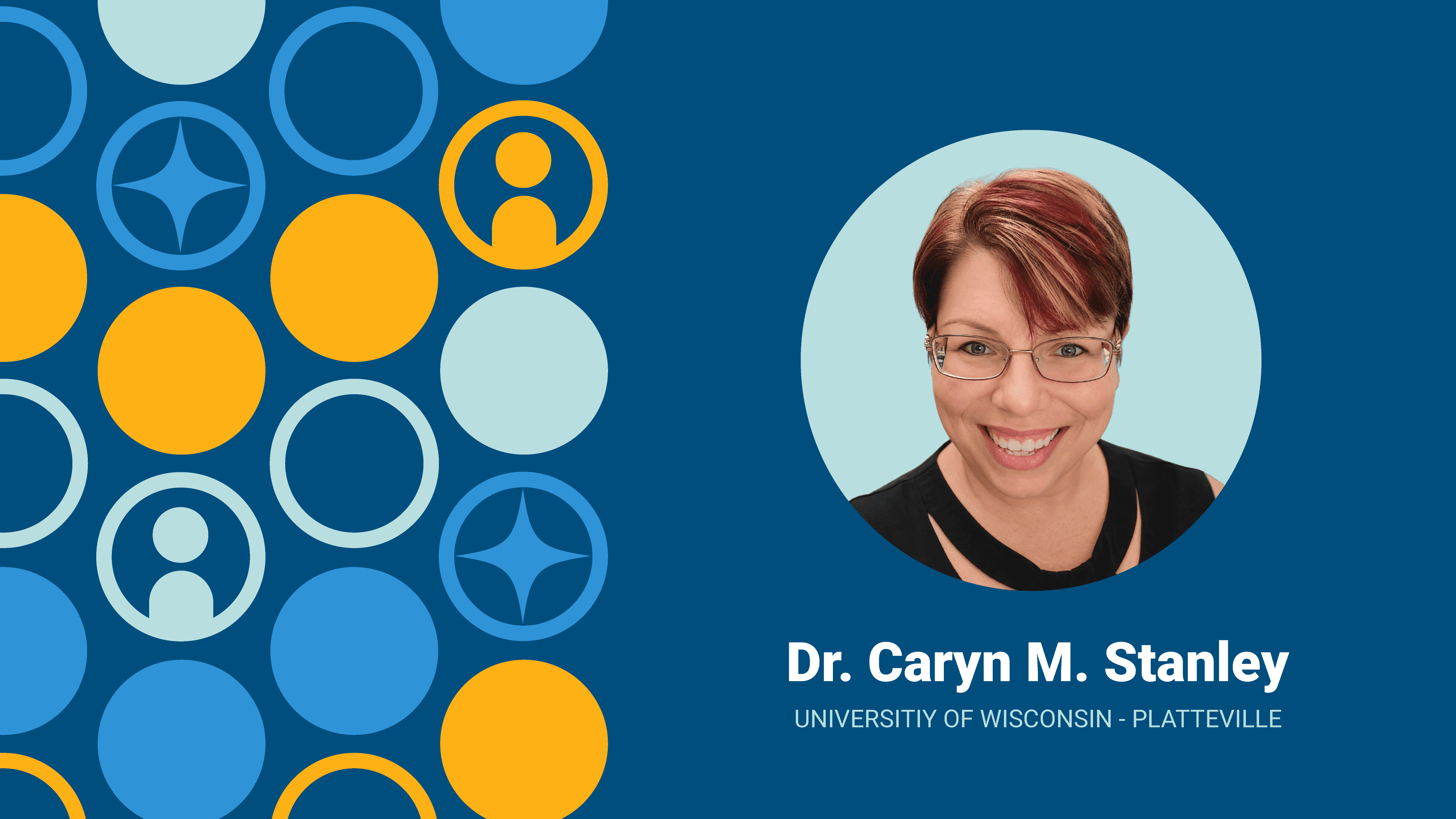
“A Framework for Student Accountability with AI,” written by Dr. Caryn M. Stanley of the University of Wisconsin-Platteville
Last fall, I stopped asking whether my students used AI. Instead, I implemented Dr. Randal Schober’s AI framework and started asking students to name, on a delegation worksheet, which parts of the work they handed over.
That one change did more for their thinking than any AI syllabus policy I have ever written.
The real problem with student AI use is giving up judgment
Our employer partners kept telling us the same thing. Students needed more initiative.
When we dug into what that actually meant, it wasn't attitude; students didn't know how to decide what to do next.
Give a student a messy situation, and their judgment freezes. Then AI shows up as a very confident friend who never freezes. So they would hand over the whole task to AI.
The work comes back fast, polished, and hollow because it's missing the one thing the student was supposed to bring: their own judgment, grounded in context.
A framework for deciding what students should delegate to AI
Most AI conversations in class are binary. Did you use it or didn’t you?
Instead, I gave my students three options for interacting with AI:
Automate. Low-judgment work with a clear right answer. For things like formatting, summarizing a long policy, or building an outline, you oversee, but let AI have it.
Augment. Work where you need a thinking partner. When pressure-testing your logic, trying alternate wording, or catching what you missed, you lead while AI helps.
Own it. Anything that requires context, relationships, or accountability. What do you know about this person? What happened last month? What are you willing to put your name on?
When students can't tell which is which, the delegation sheet gives them a ladder to work down. Does it involve ethics, trust, or relationships? Own it. Does it need judgment or a professional context? Augment. Is it repetitive, low-risk, and rules-based? Automate. Still not sure? Default to augment.
The three categories give students a way to move forward, but the sorting is what helps students build their judgment.
And one rule sits above all three: accountability stays with the student. However a student sorts the work, they still own the outcome. Delegating a step never delegates the responsibility for what goes out the door.
→ Download the AI Delegation Checksheet
How to use an AI delegation framework in the classroom
I introduced this at midterm in my HR management course. Students got a delegation sheet and one lecture’s worth of explanation and practice.
Before they touched the assignment — or any AI tool — they had to break it into pieces. Not “write a response to this employee complaint,” but things like:
What's the policy here? What's the history with this employee? What tone does this situation need? What am I recommending, and why?
Then they labeled each piece: automate, augment, or own it.
Suddenly, “what do I do next?” had an answer. The sheet made the task look like a series of steps rather than one big wall.
The best student work used AI without giving up judgment
Here's what surprised me. The weakest submissions weren’t always the ones that used AI the most. They were the ones that handed over the judgment.
In one instance, AI proposed an overly formal progressive-discipline process for a company with nine employees. It designed onboarding systems that no small business could ever staff, and recommended solutions that the client could not afford.
Every one of those responses was well written, with clear structure, clean grammar, and professional tone. And every single one was wrong for the client.
Then came the other half of the surprise. The best work wasn't AI-free either.
The strongest submissions were from students who used AI and then argued with it. They cut the recommendations that didn't fit the business. They added the operational details that only someone who read the file and knew the client and the law would know.
That's augment. It beat both extremes.
When I showed students that pattern, the room changed. Nobody argued with me. They just started owning, reviewing, and challenging AI more.
That is a much better conversation than an ethics lecture.
How to try the AI delegation framework on one assignment
You don't have to redesign your course to use an AI delegation framework.
Pick one assignment you already use. Ask students to list the steps before they start, then label each step as automate, augment, or own it.
You WILL get complaints, because this step takes time and forces students to slow down in a world where everything else is telling them to go faster. Over time, the complaints will decrease … I promise.
Then ask the question that does the real work. Why?
Two things happen. Students have to defend their reasoning out loud. And you get to see how they think, which is usually more interesting than the finished product.
→ Download the AI Delegation Checksheet
Why AI accountability should focus on judgment, not the tool
The tools students and professionals use will keep changing. But look at what the sheet actually taught. Before students could decide what to delegate, they had to name the steps.
That was the whole thing our employers were asking for. “Initiative” was never about enthusiasm. It was about seeing a messy situation and using their judgment to know what the first move should be.
A student who can break a task into parts doesn’t freeze. They don't wait to be told what’s next. And they don't hand the whole thing to AI just to avoid making a decision.
We're rolling this framework out across our school of business for exactly that reason.
Not because AI is the future. Because human judgment always was.
For more from Dr. Caryn M. Stanley on teaching career readiness, check out her webinar "Teaching Workplace Readiness: Using HR Scenarios to Foster Student Ownership" and the accompanying resources.
Access the Recording and Resources ↗
Framework credit: Dr. Randal Schober, Professor of Management, Fermanian School of Business, Point Loma Nazarene University. Shared with permission.
Read the Blog

How to Teach Paid Advertising Without an Ad Budget
In many marketing careers, and even some entry-level roles, employees will be expected to run paid ads for the company with an effective strategy. Although this is taught in undergraduate marketing degrees, students aren’t guaranteed ad experience. Even in an internship, they’re unlikely to be given a real budget to spend.
By using a simulated budget to practice running ads through a Stukent® Simternship®, students can gain that experience and walk in the door on day one with the confidence to execute campaigns without having their hand held by their manager.
Why Are Live Ad Budgets Difficult to Implement?
A strong marketing education begins with great instruction. Hands-on experience extends that knowledge and prepares students for real work. But providing every student with live advertising budget management is challenging due to budgetary, logistical, and access constraints, hindering large-scale offerings by colleges and universities.
Here are a few reasons why using live ad budgets isn't always possible:
Financial Scalability: Running meaningful ad campaigns takes real money. For many institutions, providing enough budget for every student to collect useful campaign data isn't realistic.
Outcome Volatility: Working with local businesses offers valuable experience, but partnerships vary. Students may have limited access to ad accounts or budgets because those decisions are up to the client, resulting in inconsistent learning experiences.
Accessibility and Equity: Not every student has access to an internship or client project. When those opportunities become the main source of hands-on learning, many students miss the chance to build measurable results and portfolio-ready experience.
What Are the Limitations of Traditional Marketing Assignments?
Traditional assignments, mock campaigns, and case studies help students practice marketing concepts in a low-risk environment, but without real data, students can't see how their decisions affect results. That makes it difficult to learn one of the most important skills in digital marketing: testing, measuring, and improving campaigns over time. Marketing certifications can also help students build a foundation and learn industry terminology. However, they rarely offer students opportunities to apply those concepts in ways that demonstrate business impact. Without hands-on practice, it's harder for students to build the confidence and experience employers seek.
How Do Stukent Simternships Resolve the Experience Gap?
Stukent Simternships help bridge the gap between theory and professional practice. In the Digital Marketing and Social Media Simternships, students are entrusted with substantial simulated budgets to manage across several ad campaigns and platforms.
In the Digital Marketing Simternship, students manage full-funnel campaigns and budgets and see how their choices affect performance. As they work through each challenge, they receive immediate feedback that helps them improve. By the end of the experience, students can demonstrate to employers that they can analyze key performance indicators, adjust marketing strategies, and make data-driven decisions.
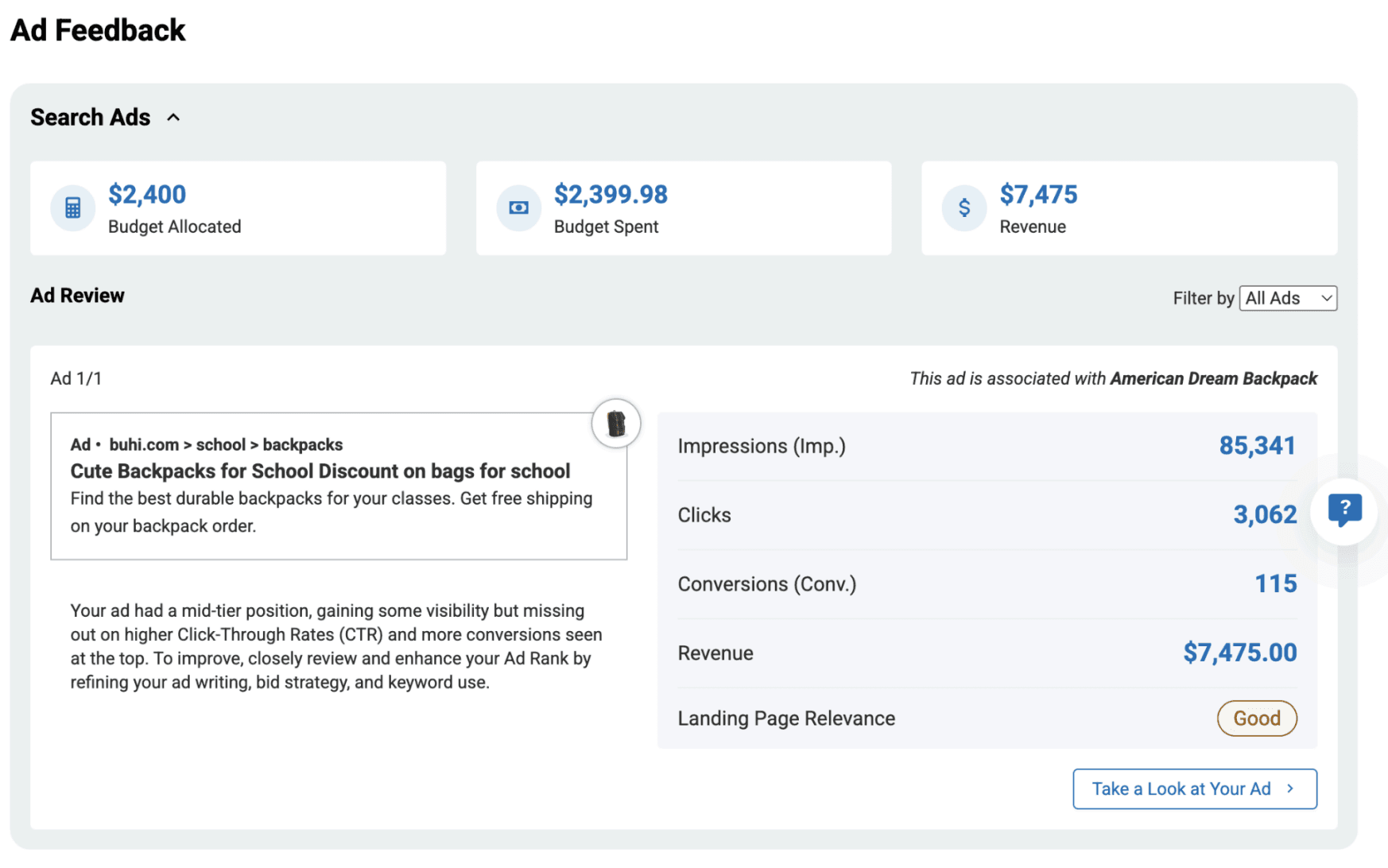
The Social Media Simternship gives students experience with both organic and paid strategies across platforms like Instagram, Facebook, and TikTok. They create campaigns, evaluate performance, and make decisions based on real data. Students also explore influencer marketing by comparing creators, audiences, and costs to identify the best fit for their campaigns.
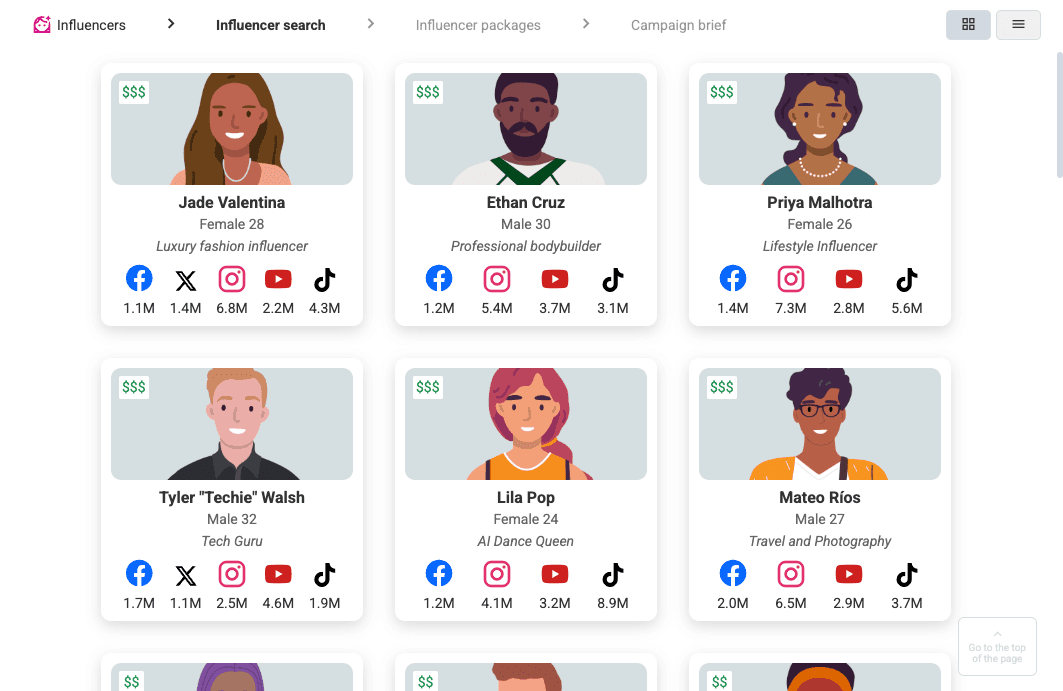
For instructors, these tools are easy to bring into the classroom. They integrate with your learning management systems (LMS) and include automated grading, so setup takes just a few steps. That means you can spend less time managing assignments and more time helping students learn.
Elevate Your Marketing Curriculum Today
Provide your students with the experience they need to lead. Get free instructor access to Stukent Simternships and transform your classroom into a professional marketing agency.
Read the Blog

Your Students Think They Know Social Media, but the Data Says Otherwise
If you ask a room full of marketing students if they're confident using social media, you’ll see almost every hand go up. Students spend hours every day creating and posting content, following trends, and engaging on platforms like Instagram and TikTok.
However, using social media and managing it for a brand are two very different things. Professional social media marketers do far more than post content. They build strategies, identify target audiences, and analyze data. Practice with those skills will never come from personal use alone. The challenge is that many students don’t realize there is a gap until they enter their first professional role.
That raises an important question for marketing educators: How do you teach professional social media skills to students who are convinced they’ve already mastered them?
Read the Full Case Study →
The study
In spring 2025, Dr. Kristine Nicolini, Ph.D., APR, at the University of Wisconsin–Oshkosh studied the effectiveness of the Stukent® Social Media Simternship® in her classroom. For the first time, her students stepped into more than just a creative role. They became social media specialists for Buhi Supply Co., managing organic and paid content, working within budget constraints, and using live performance data to evaluate their decisions week after week.
Pre- and post-course surveys tracked how Dr. Nicolini’s students felt about their skills before and after the experience. The results were hard to ignore.
The results
Before the Simternship, 53% of students reported feeling academically confident in social media marketing. After the Simternship, that number climbed to 85.5%. And career readiness more than doubled, rising from 34.6% to 77.1%.
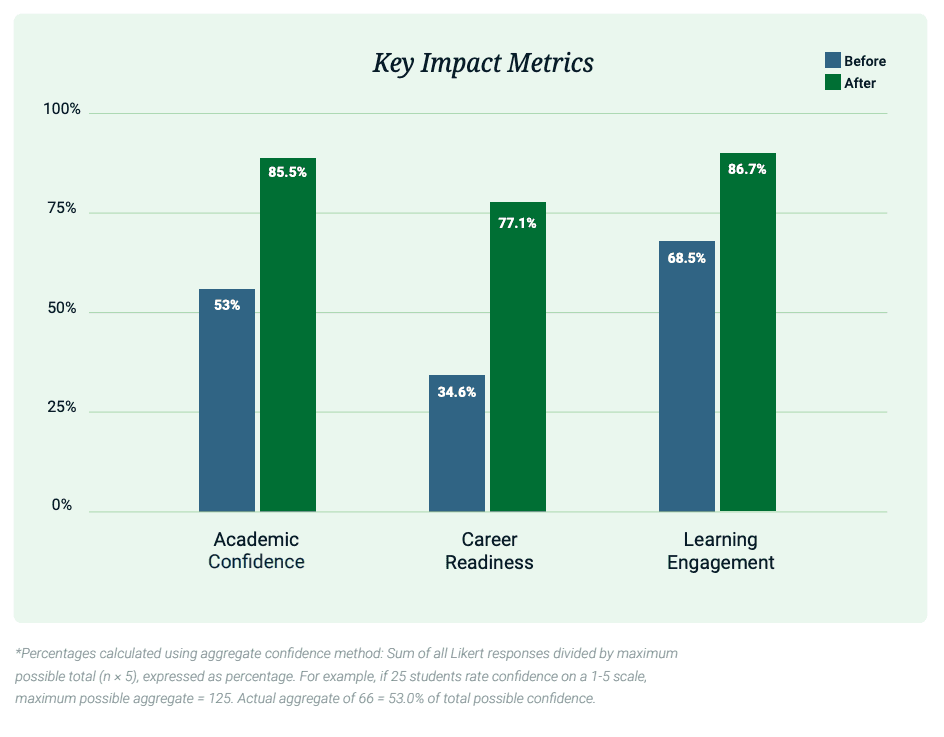
The data shows that not only did students feel more confident, they felt more confident about the right things. Before, student confidence clustered around familiarity with the platform. After participating in the Simternship, student confidence shifted toward the necessary skills the field needs: analytics-driven decision-making, paid media strategy, and ROI evaluation. One student put it this way:
"There is a lot more prepping that goes into a social media marketing plan than I thought. You can't just find pretty pictures to post and make a caption. You have to research, look at analytics, and have a plan going into it."
That shift in students' perspective showed up across the class. Another student said this:
"My understanding of social media marketing has become much more practical and strategic. I no longer see it as just posting content to gain likes or followers—instead, I now understand it as a data-driven process that requires careful planning, audience targeting, and performance analysis."
Both students realized social media marketing is more strategy than content creation alone.
Simternships make learning accessible to everyone
Not every student walks into your course from the same starting line.
Some students have had internships, while others have run paid campaigns or managed accounts for small businesses. But the majority of students haven't had either. In 2024, Inside Higher Ed reported that there were “8.2 million college students who wanted an internship in the U.S., yet only 3.6 million had access to one, and only 2.5 million had a quality one.” In this job market, experience is expected even at the entry level. Without any experience, that gap will inevitably follow students past graduation, making it much more difficult to land a job or succeed in the one they get.
Simternships help make hands-on experiences more equitable by giving everyone an opportunity to gain career-ready skills.
Students who entered Dr. Nicolini's course with no professional experience gained the most, nearly closing the gap with peers who had already worked in professional settings.
Is the Social Media Simternship a good fit for your course?
The Stukent Social Media Simternship integrates into an existing curriculum without adding prep for instructors. And the outcome speaks for itself. As Dr. Nicolini said:
"Students graduate not just with knowledge, but with confidence, competence, and the ability to articulate their professional readiness to employers."
Stukent offers free instructor access to the Social Media Simternship and courseware so you can explore them before committing to anything.
See the full UWO case study results
This blog post only highlights the final results of this study. The full case study covers the methodology, results by student experience level, and what the data means for how we think about career readiness in marketing education.
Download the Full Case Study →
If you're curious whether the Simternship could work in your classroom, request free instructor access to the platform or schedule a demo to see the Stukent Social Media Simternship in action today!
Read the Blog