

Join the educators making accounting principles add up for students
Choose the path that fits your course
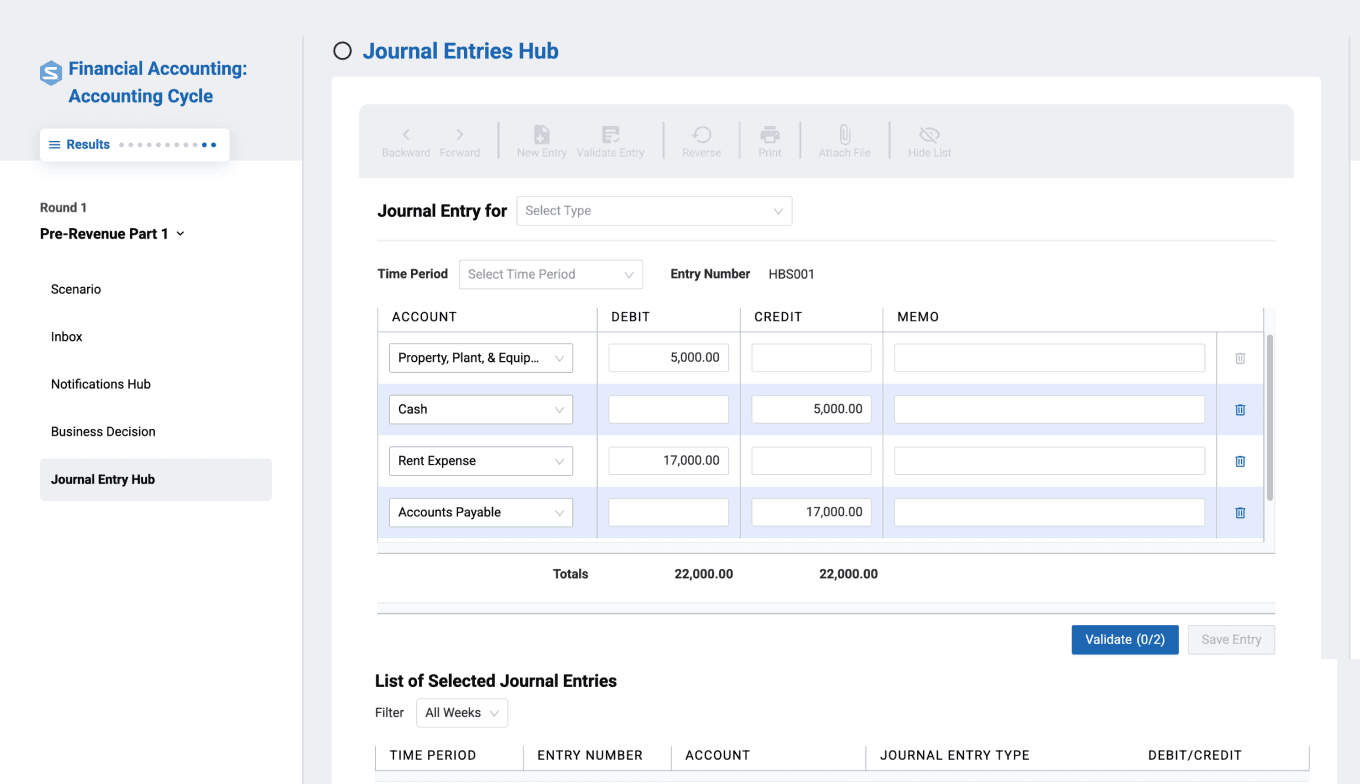
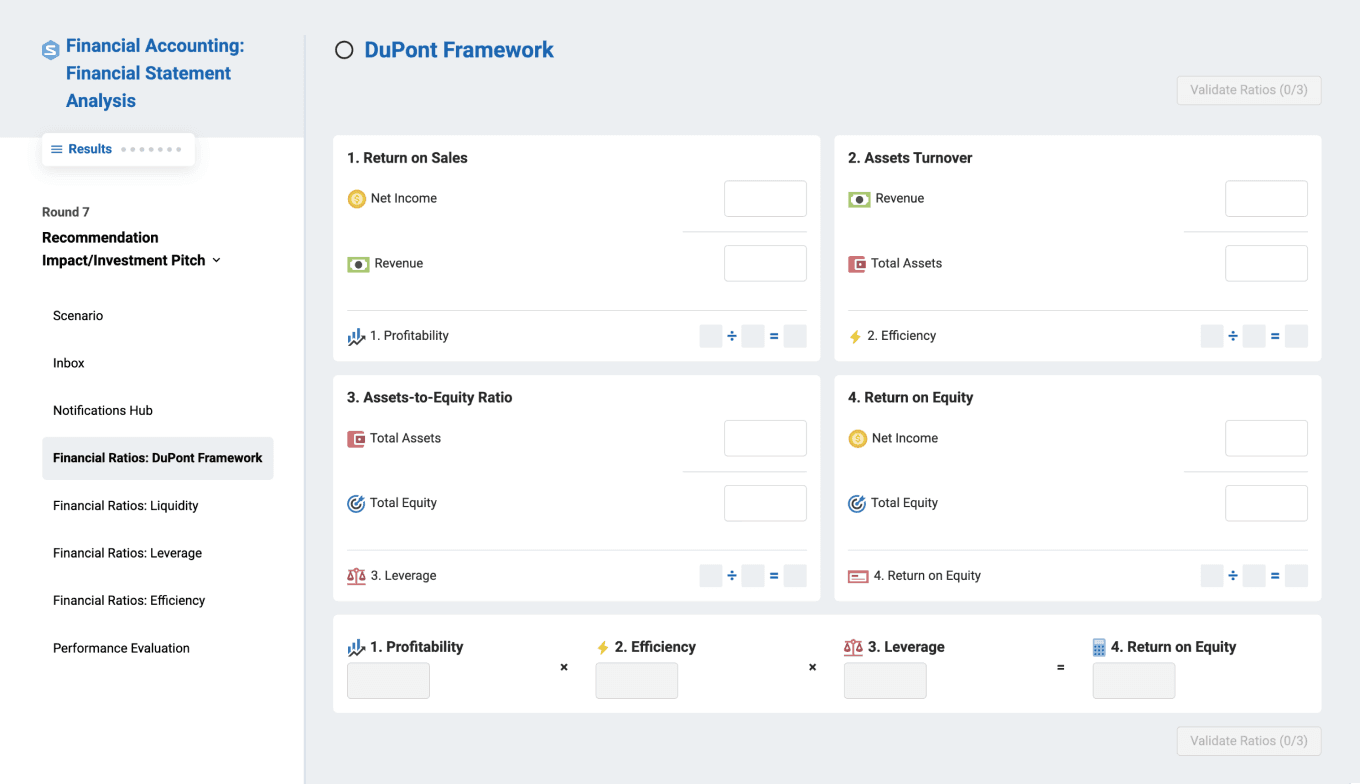
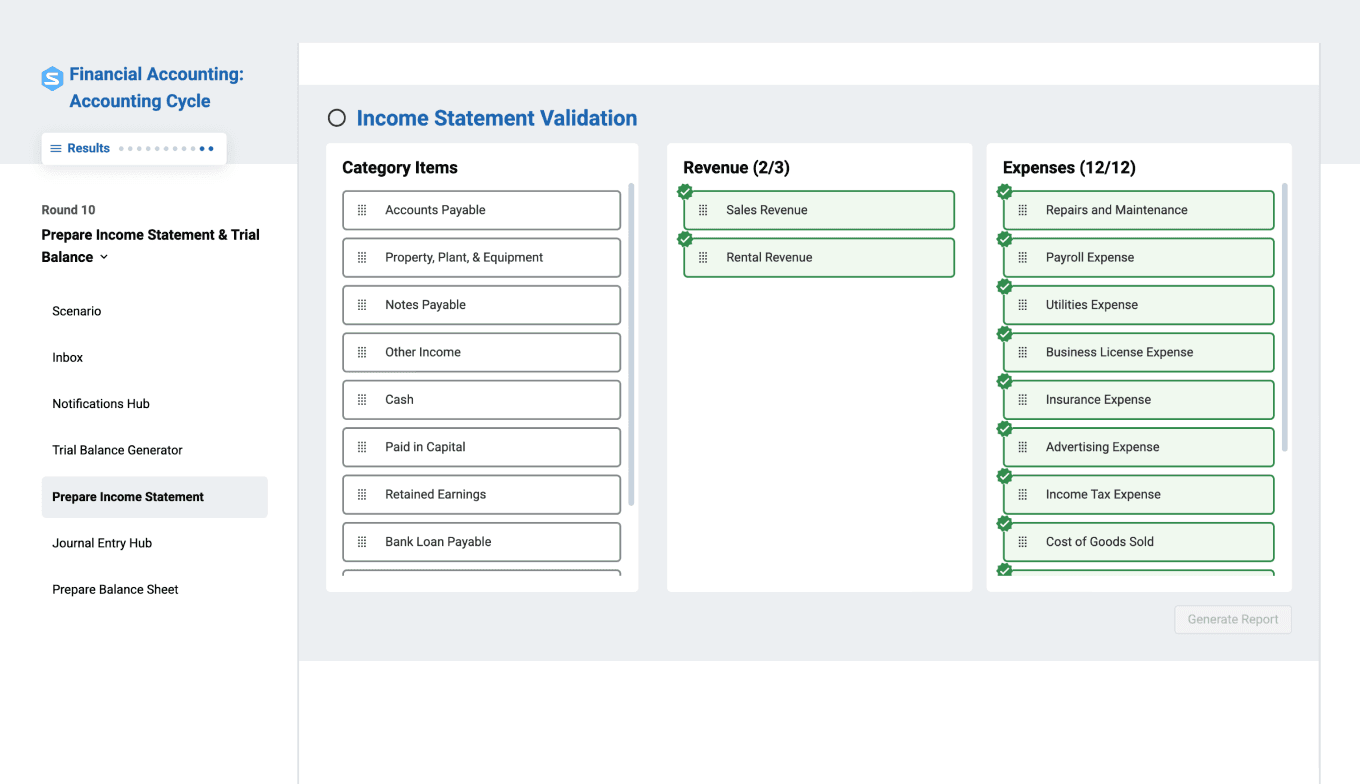
The Stukent® Financial Accounting Simternship® gives students hands-on practice with the mechanics of accounting and the reasoning behind it. In the financial statement analysis scenario, students use financial statements to evaluate company health and connect the numbers to real business decisions. In the accounting cycle scenario, students record transactions from realistic business documents and experience the entire accounting cycle from first entry to final report. Use either scenario on its own or pair both for a complete picture of how accounting works. The Simternship integrates seamlessly with any financial accounting course, regardless of which textbook, edition, or publisher you use.
Skills that help students make accounting business decisions
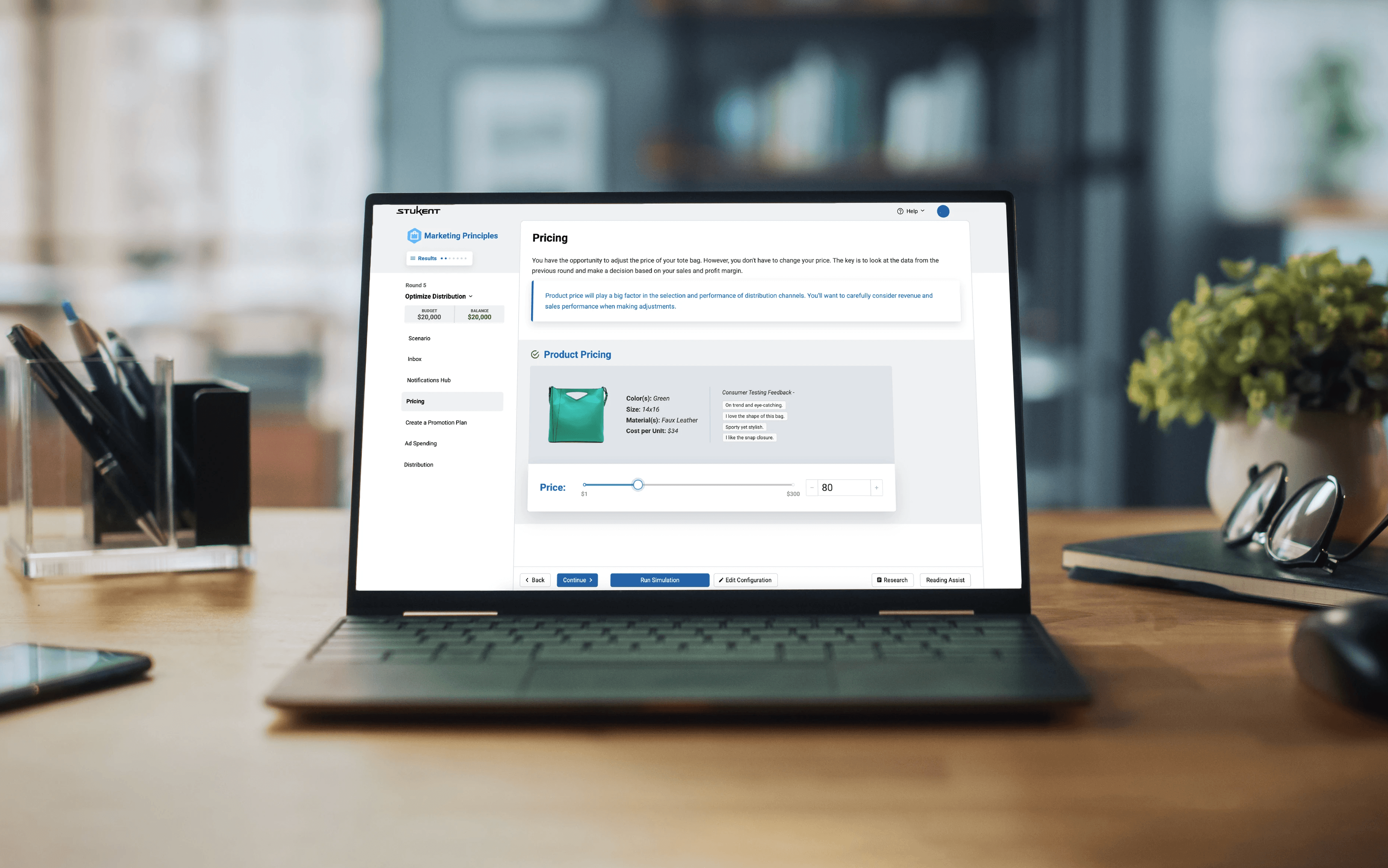
Every round of the Simternship connects transactions, statements, and ratios to real business decisions, so students leave with an understanding of accounting they'll use no matter where their career takes them.
The Simternship gave me exceptional firsthand experience in understanding journal entries through virtual software and tools, which I was able to leverage at work to improve the quality of the reports I send to management.
Arshiyan K., Student

Preview
What’s in a Simternship round?
Each round asks students to apply what they’ve learned to real-world accounting scenarios. Curious to see how the Simternship works? Take a guided tour of a round!


A clear path through every stage of the accounting cycle
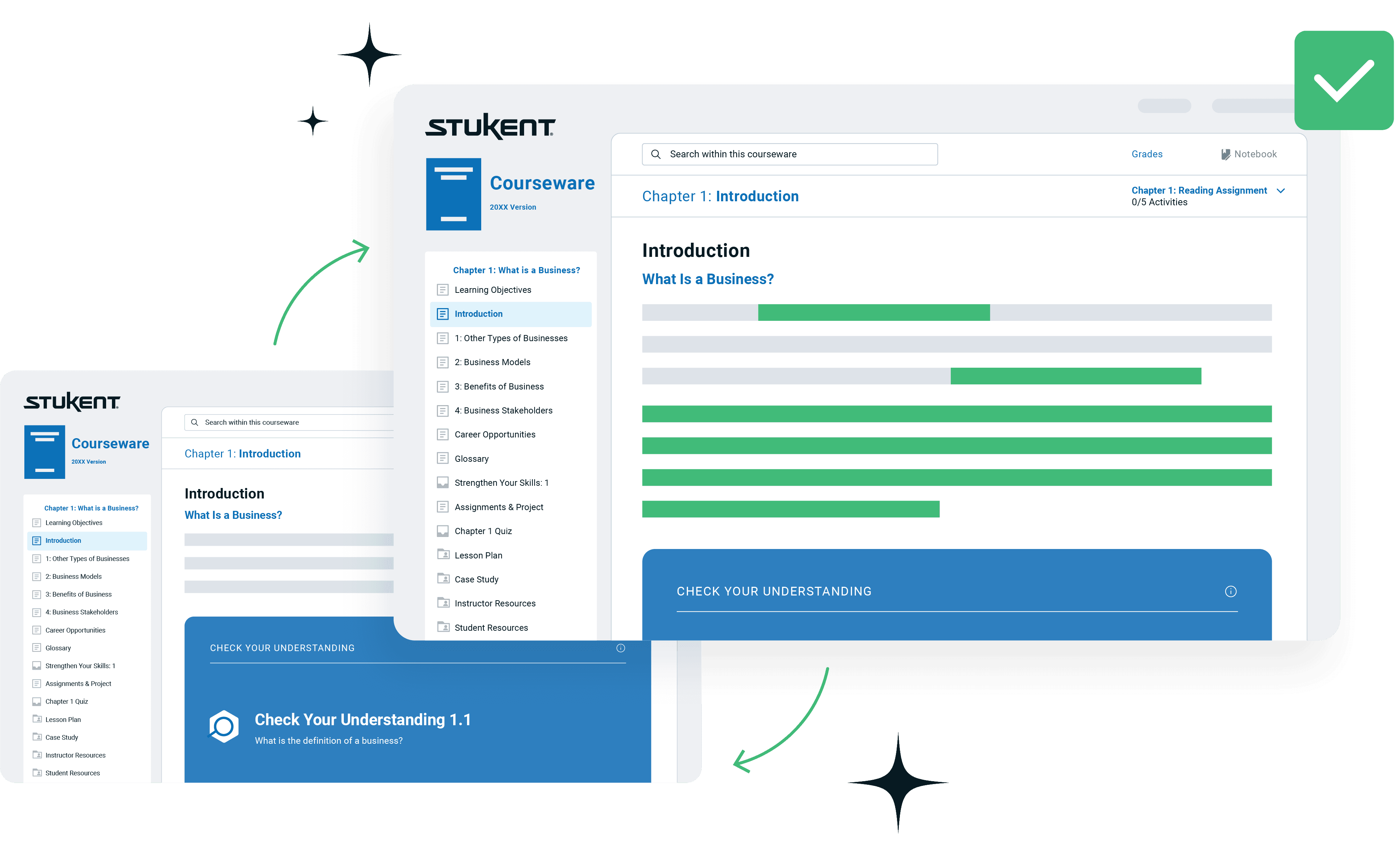
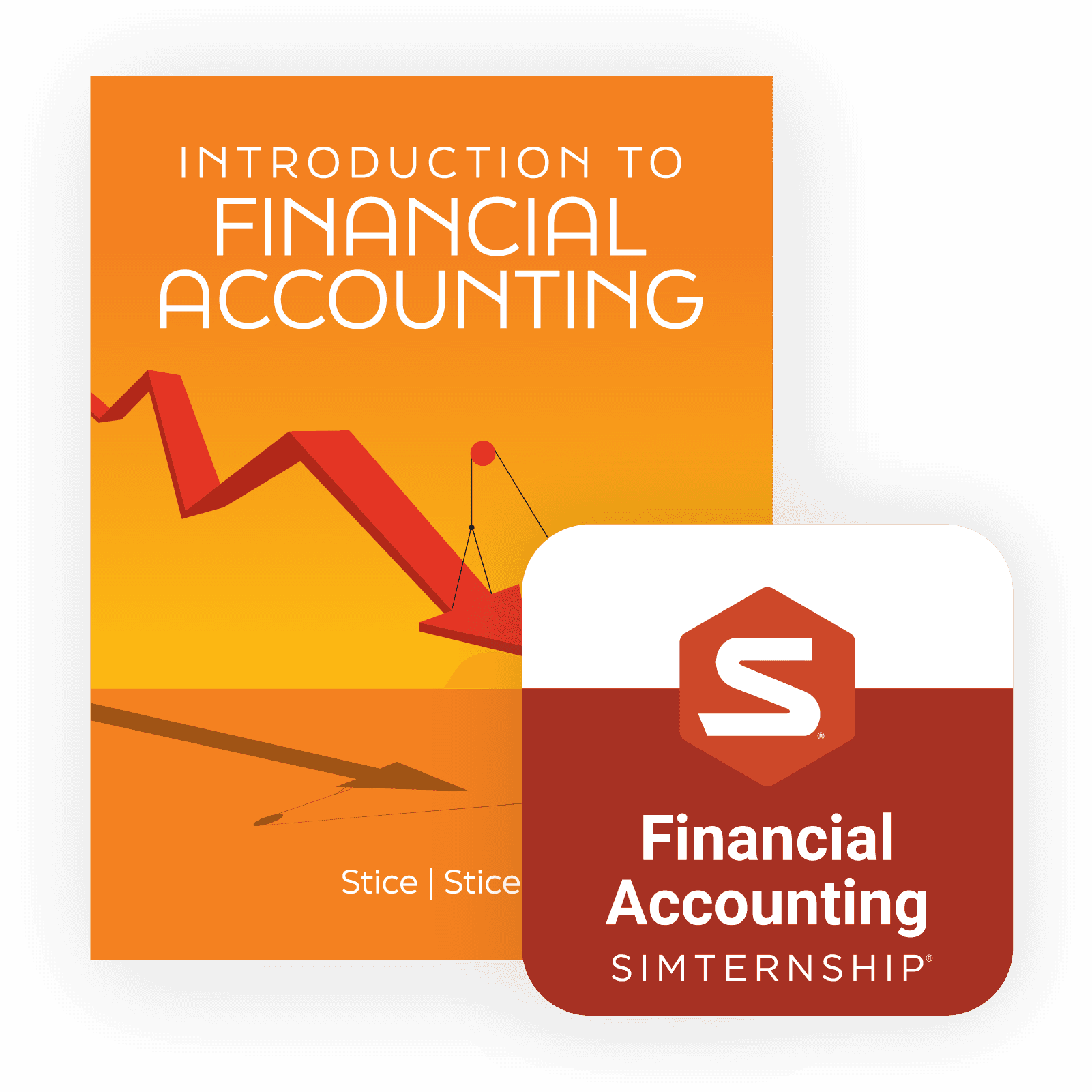
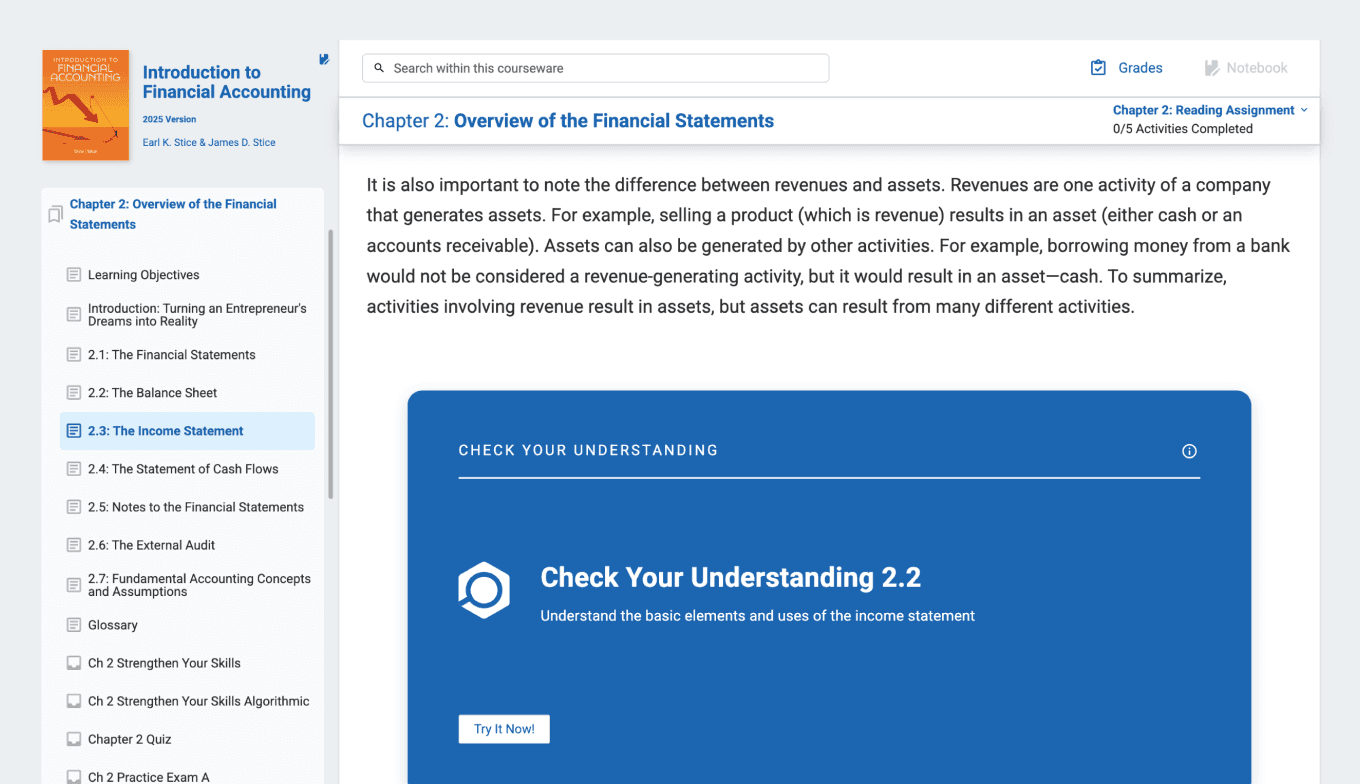
The "Introduction to Financial Accounting" courseware acquaints students with the mechanics of accounting, including internal controls, receivables, inventory and cost of sales, investments, liabilities, equity, cash flow, and financial statements. With turnkey activities, real-world examples, and annual updates, your course stays current while your students stay engaged.
My students enjoyed the simulation; it made them feel like they were running a small company. […] It really helped them bring the accounting cycle into practice.
Heather Jackson, Instructor
Preview
Every essential accounting concept
Fourteen chapters take students from the purpose of accounting itself through the mechanics of the accounting cycle, internal controls, and balance sheets, all the way to analyzing financial statements. It's built so each concept lays the foundation for the next.
Chapter 1: Purpose and Users of Accounting
Chapter 2: Overview of the Financial Statements
Chapter 3: The Accounting Cycle: The Mechanics of Accounting
Chapter 4: Completing the Accounting Cycle
Chapter 5: Internal Controls: Ensuring the Integrity of Financial Information
Chapter 6: Receivables: Selling a Product or Service
Chapter 7: Inventory and the Cost of Sales
Chapter 8: Employee Compensation
Chapter 9: Investments: Property, Plant, and Equipment and Intangible Assets
Chapter 10: Financing: Long-Term Liabilities
Chapter 11: Financing: Equity
Chapter 12: Investments: Debt and Equity Securities
Chapter 13: Statement of Cash Flows
Chapter 14: Analyzing Financial Statements









Last year, … I had a 50% dropout rate between three sections [of our survey of accounting course]. … And then they did the [Stukent Financial Accounting Simternship], and all the students said, ‘I still hate this course, but now I get it — the simulation made me understand what the point was.' I lost two students.
Anonymous Professor
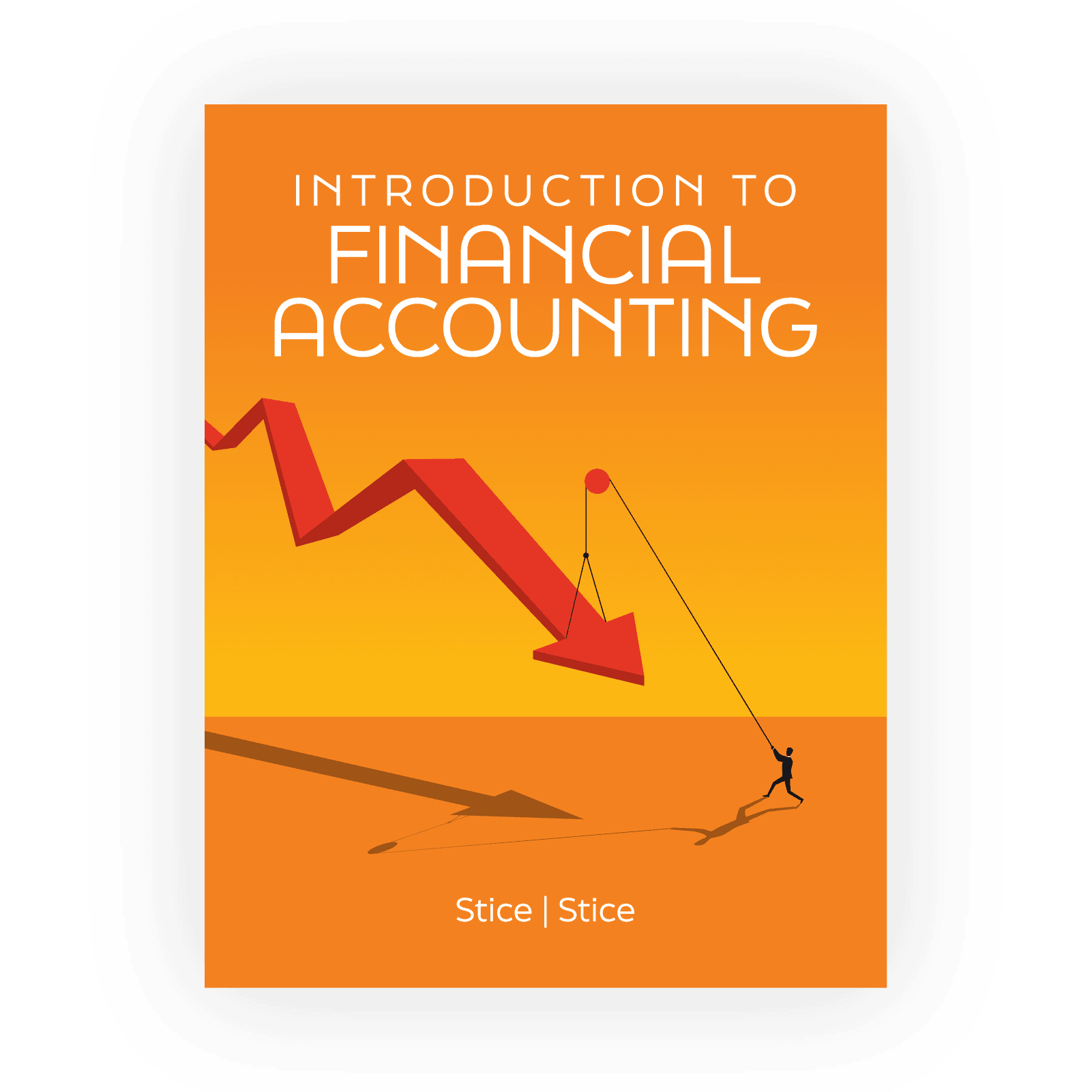
See accounting principles come to life in your next class with the "Financial Accounting" courseware.
About the authors
Dr. Kay Stice
Kay Stice is an emeritus professor of accounting at Brigham Young University. He holds a bachelor’s and master’s degree from Brigham Young University and a Ph.D. from Cornell University. He’s taught at top universities around the world and won numerous awards, including the Maeser Excellence in Teaching Award at BYU, which is the university’s highest teaching honor. In his 30 years of teaching, Kay has taught thousands of students in person and millions online.
Dr. Jim Stice
Jim Stice is an emeritus professor of accounting at Brigham Young University, where he spent his career teaching, conducting research, and serving in administrative roles. He’s won numerous teaching awards, served as a visiting professor at INSEAD, and worked in executive education for companies such as IBM and Ernst & Young. Over his 30-year career, Jim has educated thousands of accounting students and professionals in person and has reached millions of learners online.
Frequently Asked Questions
What is the Stukent Financial Accounting Simternship?
Does the Stukent Financial Accounting Simternship work with any textbook?
How does the Stukent Financial Accounting Simternship help students retain accounting concepts?
Does Stukent integrate with my LMS?
Does the Stukent Financial Accounting Simternship include more than one scenario?
Is Stukent suitable for online and hybrid courses?
How do I get started?
Instructor support you can count on
With a 96.4% satisfaction rate and an average response time under 10 minutes, the Stukent Support Team and customer success managers ensure you can focus on teaching.
Always have the latest edition
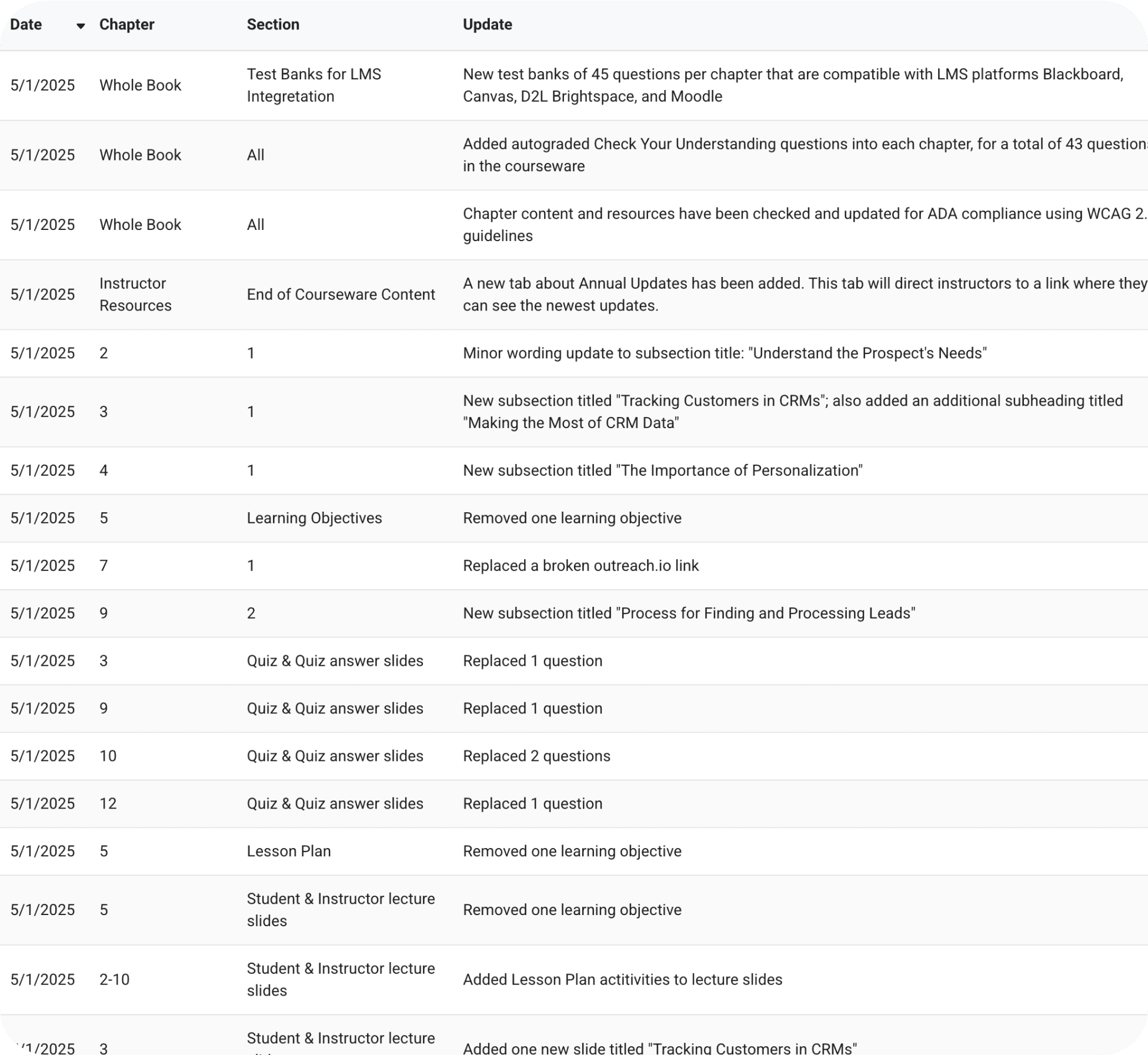
The “Introduction to Financial Accounting” courseware contains robust instructional resources for educators and students. Best of all, the Stukent team updates the courseware annually, which means your curriculum will always be on the cutting edge of your industry.