Back to Blog Library
Article
A Framework for Student Accountability with AI

HR Management
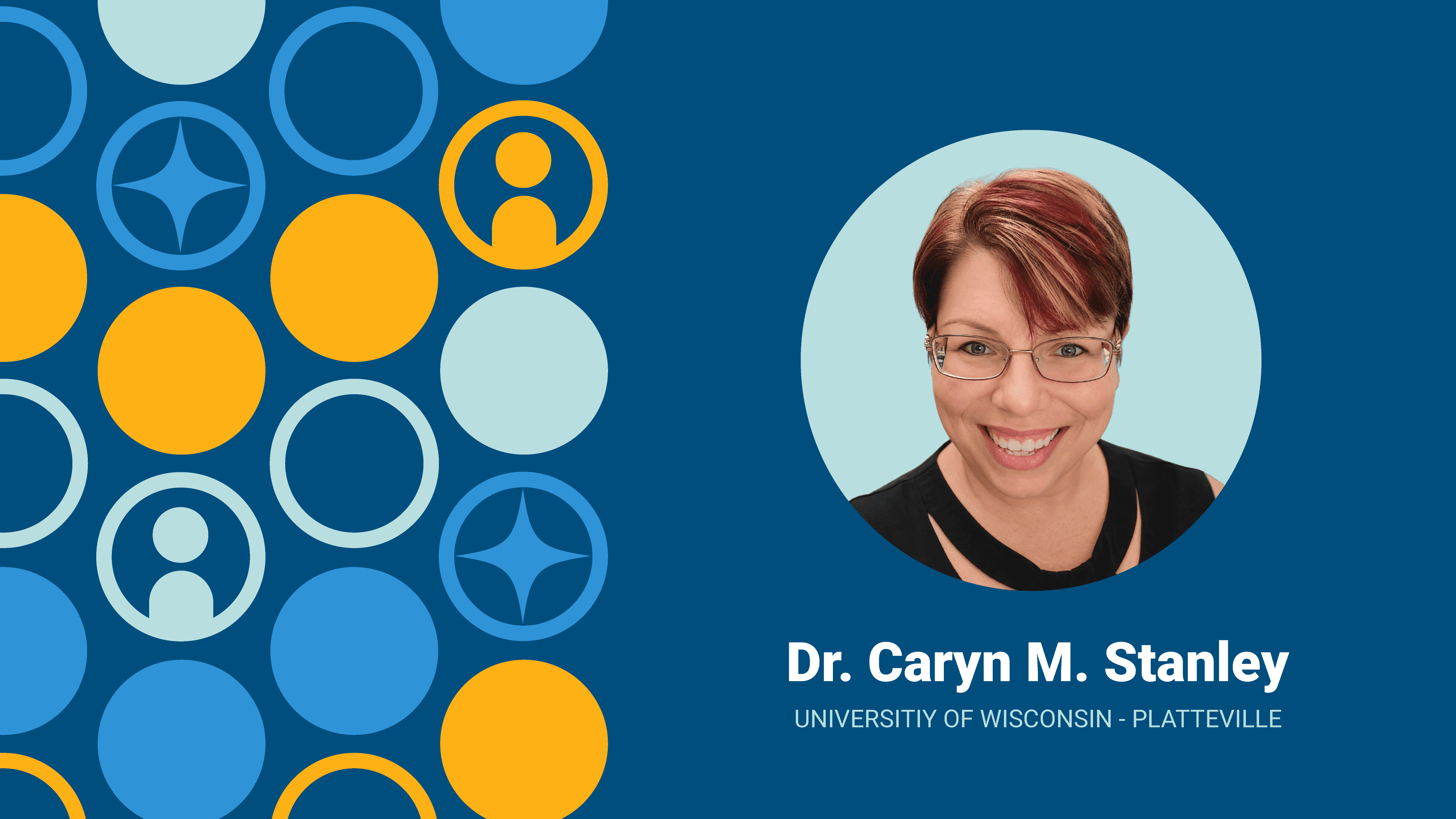
“A Framework for Student Accountability with AI,” written by Dr. Caryn M. Stanley of the University of Wisconsin-Platteville
Last fall, I stopped asking whether my students used AI. Instead, I implemented Dr. Randal Schober’s AI framework and started asking students to name, on a delegation worksheet, which parts of the work they handed over.
That one change did more for their thinking than any AI syllabus policy I have ever written.
The real problem with student AI use is giving up judgment
Our employer partners kept telling us the same thing. Students needed more initiative.
When we dug into what that actually meant, it wasn't attitude; students didn't know how to decide what to do next.
Give a student a messy situation, and their judgment freezes. Then AI shows up as a very confident friend who never freezes. So they would hand over the whole task to AI.
The work comes back fast, polished, and hollow because it's missing the one thing the student was supposed to bring: their own judgment, grounded in context.
A framework for deciding what students should delegate to AI
Most AI conversations in class are binary. Did you use it or didn’t you?
Instead, I gave my students three options for interacting with AI:
Automate. Low-judgment work with a clear right answer. For things like formatting, summarizing a long policy, or building an outline, you oversee, but let AI have it.
Augment. Work where you need a thinking partner. When pressure-testing your logic, trying alternate wording, or catching what you missed, you lead while AI helps.
Own it. Anything that requires context, relationships, or accountability. What do you know about this person? What happened last month? What are you willing to put your name on?
When students can't tell which is which, the delegation sheet gives them a ladder to work down. Does it involve ethics, trust, or relationships? Own it. Does it need judgment or a professional context? Augment. Is it repetitive, low-risk, and rules-based? Automate. Still not sure? Default to augment.
The three categories give students a way to move forward, but the sorting is what helps students build their judgment.
And one rule sits above all three: accountability stays with the student. However a student sorts the work, they still own the outcome. Delegating a step never delegates the responsibility for what goes out the door.
→ Download the AI Delegation Checksheet
How to use an AI delegation framework in the classroom
I introduced this at midterm in my HR management course. Students got a delegation sheet and one lecture’s worth of explanation and practice.
Before they touched the assignment — or any AI tool — they had to break it into pieces. Not “write a response to this employee complaint,” but things like:
What's the policy here? What's the history with this employee? What tone does this situation need? What am I recommending, and why?
Then they labeled each piece: automate, augment, or own it.
Suddenly, “what do I do next?” had an answer. The sheet made the task look like a series of steps rather than one big wall.
The best student work used AI without giving up judgment
Here's what surprised me. The weakest submissions weren’t always the ones that used AI the most. They were the ones that handed over the judgment.
In one instance, AI proposed an overly formal progressive-discipline process for a company with nine employees. It designed onboarding systems that no small business could ever staff, and recommended solutions that the client could not afford.
Every one of those responses was well written, with clear structure, clean grammar, and professional tone. And every single one was wrong for the client.
Then came the other half of the surprise. The best work wasn't AI-free either.
The strongest submissions were from students who used AI and then argued with it. They cut the recommendations that didn't fit the business. They added the operational details that only someone who read the file and knew the client and the law would know.
That's augment. It beat both extremes.
When I showed students that pattern, the room changed. Nobody argued with me. They just started owning, reviewing, and challenging AI more.
That is a much better conversation than an ethics lecture.
How to try the AI delegation framework on one assignment
You don't have to redesign your course to use an AI delegation framework.
Pick one assignment you already use. Ask students to list the steps before they start, then label each step as automate, augment, or own it.
You WILL get complaints, because this step takes time and forces students to slow down in a world where everything else is telling them to go faster. Over time, the complaints will decrease … I promise.
Then ask the question that does the real work. Why?
Two things happen. Students have to defend their reasoning out loud. And you get to see how they think, which is usually more interesting than the finished product.
→ Download the AI Delegation Checksheet
Why AI accountability should focus on judgment, not the tool
The tools students and professionals use will keep changing. But look at what the sheet actually taught. Before students could decide what to delegate, they had to name the steps.
That was the whole thing our employers were asking for. “Initiative” was never about enthusiasm. It was about seeing a messy situation and using their judgment to know what the first move should be.
A student who can break a task into parts doesn’t freeze. They don't wait to be told what’s next. And they don't hand the whole thing to AI just to avoid making a decision.
We're rolling this framework out across our school of business for exactly that reason.
Not because AI is the future. Because human judgment always was.
For more from Dr. Caryn M. Stanley on teaching career readiness, check out her webinar "Teaching Workplace Readiness: Using HR Scenarios to Foster Student Ownership" and the accompanying resources.
Access the Recording and Resources ↗
Framework credit: Dr. Randal Schober, Professor of Management, Fermanian School of Business, Point Loma Nazarene University. Shared with permission.